I am a philosopher of technology and a professor of design theory at ELISAVA Barcelona School of Design and Engineering. I think, write and lecture about how we shape things and those things, in turn, co-shape our lives.
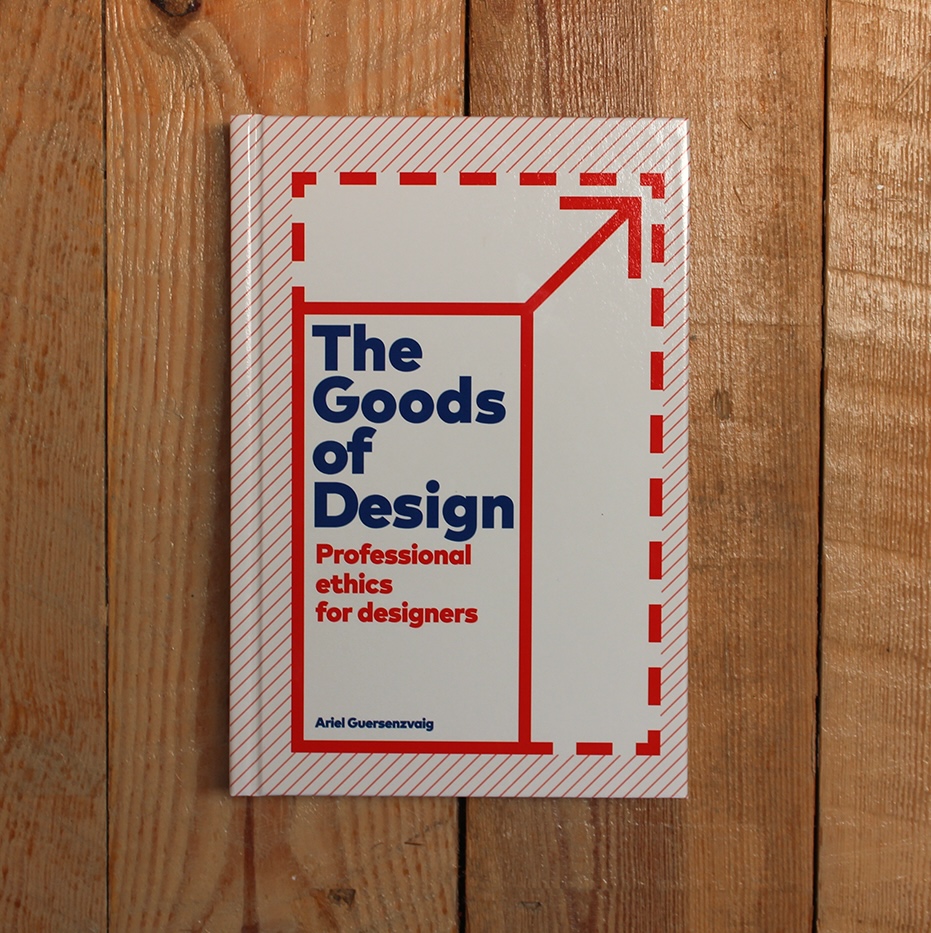
I am the author of The Goods of Design: Professional Ethics for Designers (Rowman & Littlefield, 2021), a book hailed as “Essential. All readers” by the American Library Association’s publication Choice and listed as one of Choice’s 2022 Outstanding Academic Titles.
My published work on topics such as data epistemology, autonomous weapons, machine learning in health, algorithmic justice, and professional ethics has appeared on numerous academic journals such as AI & Society, American Journal of Bioethics, Big Data & Society, Ethics and Information Technology, Journal of Bioethical Inquiry, ACM Interactions, and IEEE Technology and Society Magazine. Read more about me.
Find me on Bluesky and Linkedin
Write-ups on LinkedIn and Bluesky posts.
After 16 years on Twitter, I’ve decided to close my account and repost the least ephemeral content I share on LinkedIn here, to be free from changing platform policies and the arbitrary decisions of tech moguls. This way, I ensure my work, for whatever it’s worth, remains accessible and under my control.
-
Perfect memory isn’t understanding
Reading this, I can’t help but think of all those generative AI fanboys claiming, “ChatGPT passed the US Medical Licensing Exam and the Bar Exam for lawyers”, and insisting that people accept this as evidence of its emerging capacities. Just like Nigel Richards, the non-Spanish-speaking… Read more
-
Judging machines
Granted, skilled performance cannot be separated from technology, but that doesn’t mean we should thoughtlessly embrace any machine that can be faster or stronger than us. Richard Sennett reminds us in The Craftsman (p.105): The enlightened way to use a machine is to judge its… Read more
-
The “responsible realist” and the erosion of responsibility
In response to calls to stop using unethical and exploitative generative AI tools, some critics of this perspective argue that such demands are implausible because the incentives in favor of use are just too powerful. This objection is strong. Indeed, the path of least resistance… Read more
-
Happy accidents
OpenAI’s just published “A Student’s Guide to Writing with ChatGPT”, where they peddle their wares using the usual hyperbolic tone: Develop your ideas through Socratic dialogueLike Socrates did for his interlocutors, ChatGPT can act as an intellectual sparring partner, engaging you in dialogue to help… Read more
-

The erosive force of AI slop
Generative AI: eroding professional and vernacular illustration since 2021. I saw this on a wall, and I almost tripped on the footpath as I walked by. At best, it’s AI-generated slop; at worst, it’s a human imitation of GenAI’s characteristic hideous visual language. Read more
-
Voice assistants can’t “solve” loneliness
According to researchers at the Universitat Oberta de Catalunya, “AI voice assistants offer a promising solution to [the challenge of loneliness]”. Scepticism is warranted here. They also claim that: Voice assistants offer a promising solution to the challenge of loneliness… Firstly, this is a textbook example of… Read more
-

Interview: Entangled in Technology
I was interviewed for Leida, the magazine of the Estonian Academy of Arts. Prof. Taavi Hallimäe and I talked about the ethics of designing and the impact of technology on society and culture. As questions about the impact of technology on society and culture are… Read more
-
Legacy posts from my blog in Spanish
Below, you can find a collection of old blog posts written in Spanish from 2005 to 2015. Read more
-

La primera consultora de investigación de usuarios
Lillian Moller Gilbreth no solo fue una de las primeras ingenieras con un doctorado (obtenido en 1915), sino que también fue la primera experta en aquello que luego se convertiría en investigación de usuarios.En la década de 1910, ella y su marido, el autodidacta Frank… Read more
-
¿De qué tecnología hablamos cuando hablamos de mujeres en tecnología?
La frase, repetida hasta el hartazgo como si fuera una verdad evidente, es que hay “pocas mujeres en el mundo de la tecnología”. Quizás esto no sea tan así, quizás el problema está en nuestra clasificación de aquello que consideramos tecnología y aquello que no. Hace dos días… Read more
-
Los tuits del odio: mas allá de la cuestión legal
En un análisis titulado Los tuits del odio, aparecido en el diario El País, Joan Queralt, catedrático de Derecho penal de la Universidad de Barcelona argumenta elocuentemente que los tuits antisemitas, a pesar de su bajeza moral, no constituyen delito. El análisis de Queralt es clarísimo y su argumentación de… Read more
-
Season’s Greetings
Imagen: Wonderlijcker Ghedaente eenes Pausschen Ezels. (S.XVII) extraída de Geloof en Satire Anno1600, Rijksmuseum het Catharijnenconvent Utrecht, 1981. Read more
-
Antes de Evgeny Morozov (algunos libros recomendados)
Evidentemente, Evgeny Morozov no es el primero en comentar que los avances tecnológicos no siempre se traducen en bienestar humano y que estos vienen condicionados por los contextos socio-políticos en los que emergen y en los cuales, indefectiblemente, terminan influyendo. Antes que él, desde mucho antes de… Read more
-
Defining design (Part II)
Some definitions Every good dictionary (e.g. The Oxford Dictionary of English) defines design as both a noun and a verb. The noun refers to a plan or drawing intended to show the look and function or workings of an artefact, while the verb usually means ‘to… Read more
-
Defining design (Part I)
Defining the common aspects of design It might be redundant to state that – except in pristine nature – we are surrounded by the outcome of design. So, if design is ‘the human capacity to shape and make our environment’ (Heskett, 2002, p.5), one cannot… Read more
 Ariel Guersenzvaig, PhD